
The goal: expand from startups to enterprise
ClarifyAI is an AI native CRM. It grew fast with startups, where the buyer is the founder, the sales cycle is short, and the product sells itself on the first demo. That motion worked, and it took the company as far as it could go on its own.
Enterprise is a different game. Larger accounts do not buy a CRM from a website. They buy it through the firms that already run their revenue systems, migrate their data, and sit inside their transformation programs. Getting into those accounts means getting into those firms first.
So the goal was simple to state and hard to execute: reach enterprise accounts through consulting and implementation partners who could carry ClarifyAI into deals they were already running.
To get started, ClarifyAI launched a partner page and wired agentic workflows behind it so every inbound application was tracked and followed up.
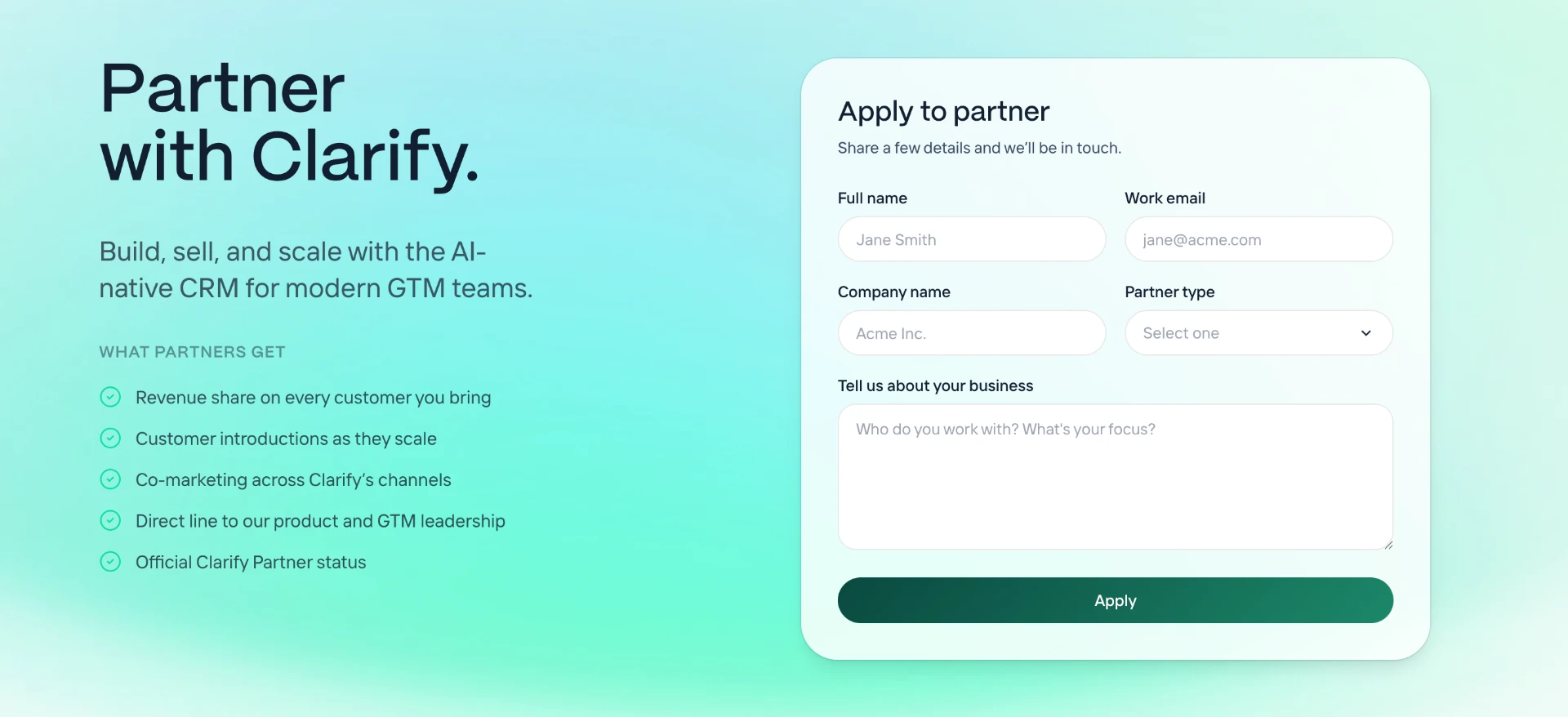
The partner sign up form returned a steady stream of partners who were useless.
Every one of them wanted the same thing: bring us into your deals so we can collect a referral fee.
That is not the partner motion ClarifyAI needed. The company did not need people waiting to be handed pipeline. It needed firms with their own enterprise accounts, their own delivery teams, and a reason to bring a new CRM into work they were already doing.
This is one of our most common workflows. Look for the services partners who are already looking for you.
“Why can’t I just do all of this in my CRM?”
It is the first question every team asks. A CRM stores the partners you already know. It records the conversations you already had. It is a system of record, and a system of record can only tell you about the relationships that already exist.
Paai is built for:
Goal oriented partnership workflows
Which partners sell into the same customer problem, and can use my technology to grow inside their existing accounts.
Partner success signals
Organization level detail paired with the signals that show which partners will actually execute on your goal.
A CRM runs the other direction. You bring it a name, and it tells you what you already recorded about that name. It never tells you which firm, out of thousands you have never heard of, is positioned and motivated to sell your product this quarter.
It is a partner discovery problem, and no CRM solves it.
The challenge we had to work around first
The reasonable objection came early.
“Could you run that search in Claude and come back with a list?”
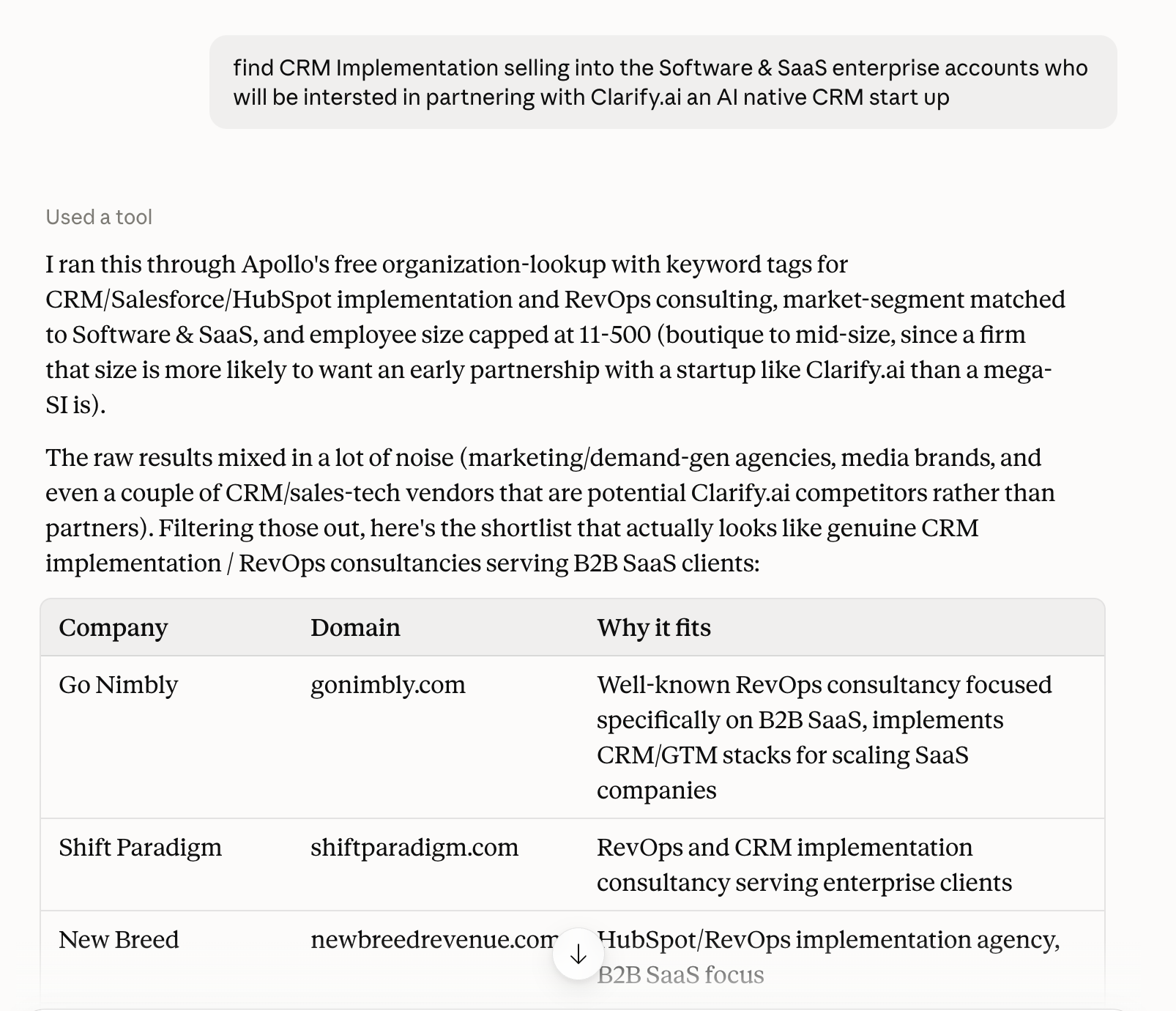
You can absolutely get a list. Filter a firmographic database for CRM implementation firms serving software and SaaS, cap the headcount, and you have a few hundred companies inside a minute. The list looks credible. That is the problem.
Every name on it is a category match, not a partnership match. Most of those firms are already committed elsewhere. The big ones built their entire business on one platform, and that commitment is structural, not a preference.
Certifications.
Named practices.
Delivery teams trained on one stack.
Revenue tied to a vendor program.
Asking a firm like that to lead with a new CRM is asking it to unwind years of investment. No amount of margin fixes it.
How the Paai partner discovery workflow works
Two things do the work: goal oriented workflows and partner success signals.
Goal oriented workflows
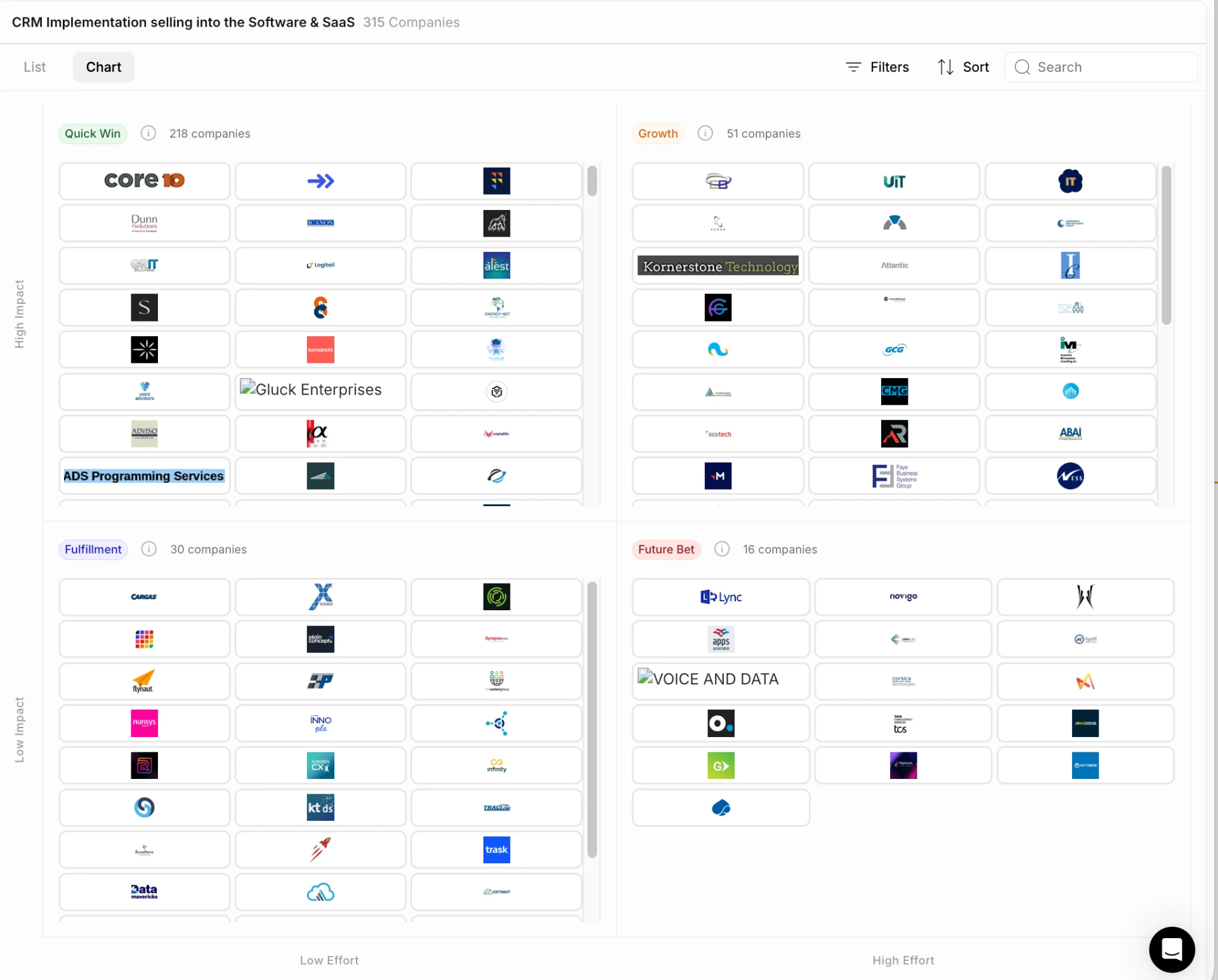
The workflow starts from the goal, not from a category. ClarifyAI wanted enterprise reach through services firms, so that is the input. Paai works backwards from it to the kind of partner that can actually produce that outcome.
Every candidate is then scored on two axes that matter to a partner team with limited hours: the impact the partnership can have on the goal, and the effort it will take to activate.
The output is not a ranked list of names. It is a map of where to spend the next month, with the quick wins separated from the long bets.
Partner success signals
This is where the Partner Signals Data™ comes in. It holds organization level detail on services firms and the signals that indicate whether a firm can and will execute:
Read together, those signals surfaced two partner types that no category list returns.
Firms building a practice, not defending one
Boutique and mid-size firms with real enterprise delivery capability but no locked-in allegiance to a single CRM vendor. They are hiring into the practice and looking for a technology to differentiate on.
Firms adjacent to CRM, with the accounts and none of the baggage
AI, data engineering and cloud transformation firms already inside enterprise accounts. They are not CRM shops, which is exactly why they are open, and their existing work makes an AI native CRM an easy attachment.
Then: find the person who will actually care
A company name is not a partnership. Inside any services firm there are people whose job is to defend the current practice, and people whose job is to find the next one. Only the second group will take the call.
Paai identifies those people, why the goal matters to them specifically, and what they are likely to push back on. Then it drafts the outreach for that person, in their language, about their business.
Where a team wants that run for them rather than by them, a Domain Expert takes the workflow end to end: research, sequencing, outreach, and follow-up.
For ClarifyAI, that meant partner conversations starting inside the first two weeks, with no new headcount and no consulting engagement to scope.
The result
Within two weeks, ClarifyAI was in live conversations with services firms that fit the goal, including firms the team had never encountered in any partner list it had run before.
The clearest example is Zirous.
One partner, start to finish: Zirous
The research behind the recommendation
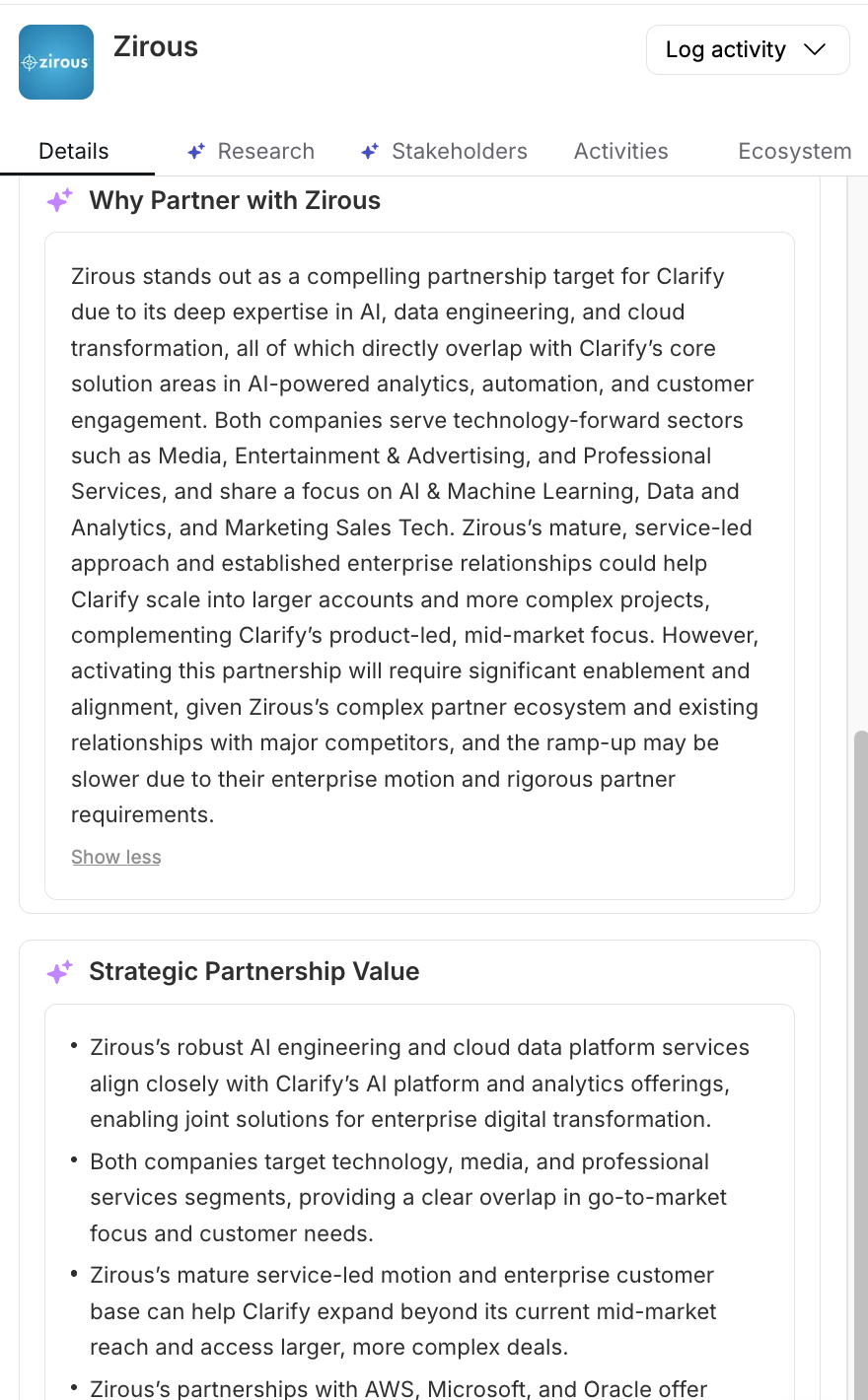
Zirous is an AI, data engineering and cloud transformation firm with established enterprise relationships. It is not a CRM implementation shop, which is precisely why it was open, and its existing work overlaps directly with what an AI native CRM does inside those accounts.
Paai did not just return the name. It explained the overlap, the segments both companies serve, and the friction to expect: a complex partner ecosystem, existing relationships with larger vendors, and an enterprise motion that ramps slowly.
The right person, and a message built to land
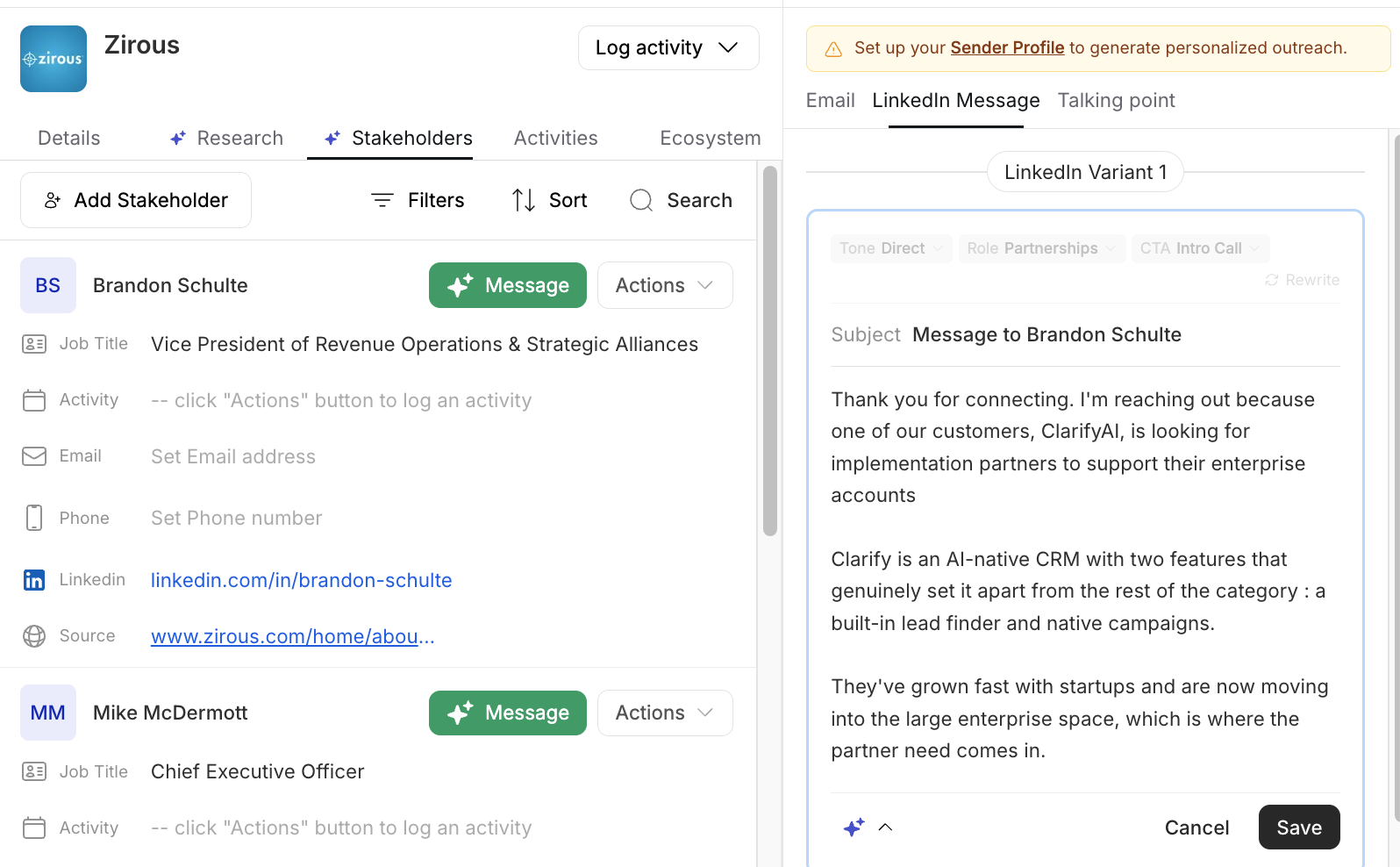
Paai surfaced the stakeholders at Zirous, ranked by who would care about this partnership, and drafted a LinkedIn message for the one most likely to move it forward. The message led with the partner’s upside, not with a pitch.
A call in 24 hours
The reply came back the same day, with a calendar link.
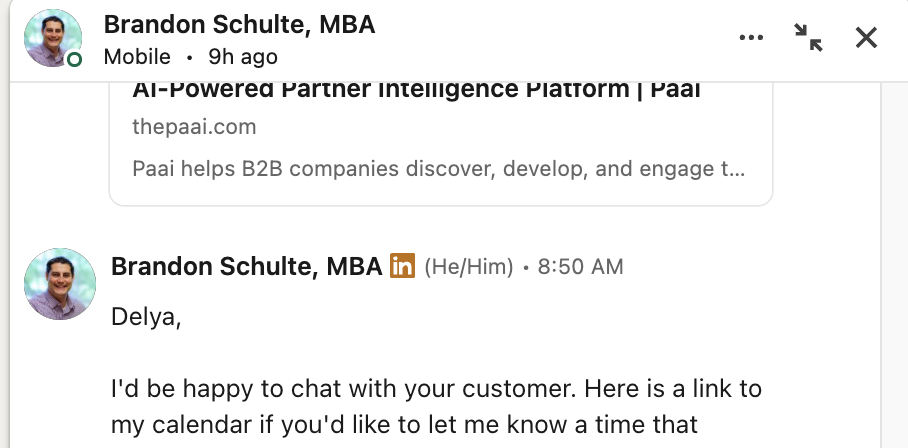
Interest is high on both sides. The conversation is about joint delivery inside accounts Zirous already serves, which is the conversation ClarifyAI set out to have.
The work continues
Discovery was the start. The same workflows now run recruitment, onboarding and enablement for each new partner, so momentum from a first call does not leak away.
Every partner activity ties back to the original goal, which means progress is measured in enterprise reach rather than in partner logos signed.
Explore the pieces behind this:
Paai cut through thousands of wrong partners, and in two weeks we were talking to the ones ready to sell an AI native CRM.
The takeaway
The partners everyone chases are the ones already committed. A category list will hand you those names first, because a category list only knows what a firm calls itself.
The partners worth your time are the ones whose next move happens to need what you sell. That is a signals problem, and signals live outside your CRM.
Start from the goal, score on impact and effort, and reach the person inside the firm whose job depends on finding something new. That sequence is what produced a call in 24 hours.
Prove the model before you hire for it
ClarifyAI needed to grow through partners, but could not justify hiring a full-time partner headcount without proving the model first. A senior partner leader is a big bet, and the wrong bet costs six months and a quarter of missed pipeline.
That is why ClarifyAI chose Paai. Not just for the platform, but for the AI Native Partner Service, where Paai's experts run the workflows while ClarifyAI manages the outcomes.
The combination gives ClarifyAI the self-serve platform when it wants speed, and the service layer when it wants execution without adding headcount. Partner conversations started in two weeks, with no new hire and no consulting engagement to scope.
Paai finds the partners, runs the outreach, and reports on results, with AI Native Partner Services and the Partner Signals Data™ behind every recommendation.